
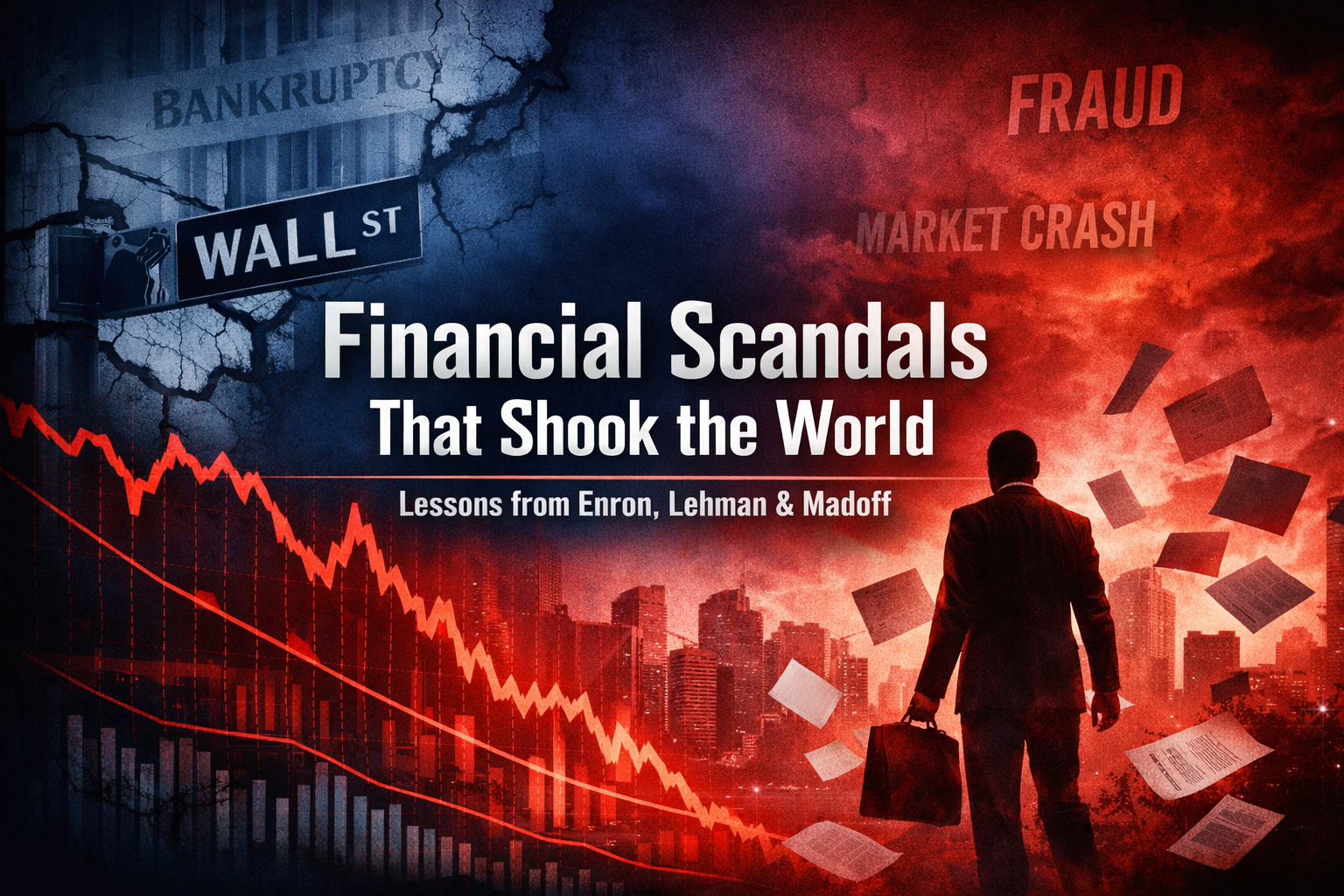
The global financial system is built on trust, transparency, and accountability. Yet history shows that when greed, weak regulation, or unethical leadership take over, the consequences can shake economies, destroy wealth, and damage millions of lives.
Here are three powerful insights drawn from major financial cases that changed the world.
1. The Danger of Creative Accounting
Enron (2001)
Enron was once considered one of the most innovative companies in America. At its peak, it was valued at over $60 billion. However, in 2001, it collapsed in one of the biggest accounting fraud scandals in history.
The company used complex accounting techniques and off-balance-sheet entities to hide debt and inflate profits. Investors, employees, and analysts trusted the company’s reported numbers — until the truth surfaced.
Key Insight:
Transparency is not optional in finance. When companies manipulate financial statements, they may survive temporarily, but collapse becomes inevitable.
Global Impact:
-
Thousands lost their jobs and retirement savings
-
Major audit firm Arthur Andersen dissolved
-
Stricter regulations like the Sarbanes-Oxley Act were introduced
Trust, once broken, is extremely difficult to rebuild.
2. Excessive Risk Can Destroy Entire Economies
Lehman Brothers (2008)
The collapse of Lehman Brothers in September 2008 marked the peak of the global financial crisis. The firm had aggressively invested in subprime mortgage-backed securities, assuming housing prices would continue rising.
When the housing bubble burst, Lehman couldn’t survive the massive losses. Its bankruptcy triggered panic across global markets.
Key Insight:
Short-term profit chasing without proper risk management can bring down even the most powerful institutions.
Global Impact:
-
Global recession
-
Millions lost homes and jobs
-
Massive government bailouts worldwide
The 2008 crisis revealed that financial systems are deeply interconnected. When one major institution fails, the shock spreads globally.
3. Fraud Can Hide Behind Respectability
Bernie Madoff & The Largest Ponzi Scheme
Bernie Madoff ran the largest Ponzi scheme in history, defrauding investors of an estimated $65 billion. What made this case shocking was his reputation — he was a respected figure on Wall Street and even served as chairman of NASDAQ.
For years, he paid old investors with money from new investors, creating an illusion of consistent returns.
Key Insight:
Reputation does not equal integrity. Due diligence is essential — no matter how trustworthy someone appears.
Global Impact:
-
Thousands of investors wiped out
-
Charities and foundations collapsed
-
Greater regulatory oversight on hedge funds
The case taught investors to question unusually consistent returns and to demand transparency.
Final Reflection
These financial disasters were different in nature — accounting fraud, reckless risk-taking, and a Ponzi scheme — yet they share common lessons:
-
Transparency protects markets.
-
Risk management is critical.
-
Ethics matter more than profits.
Finance is not just about money. It is about responsibility. When leaders forget this, the consequences can shake the entire world.